Battery alarms with the battery removed
The most common failure of all. One false alarm from a grill leads to the battery coming out and never going back in.

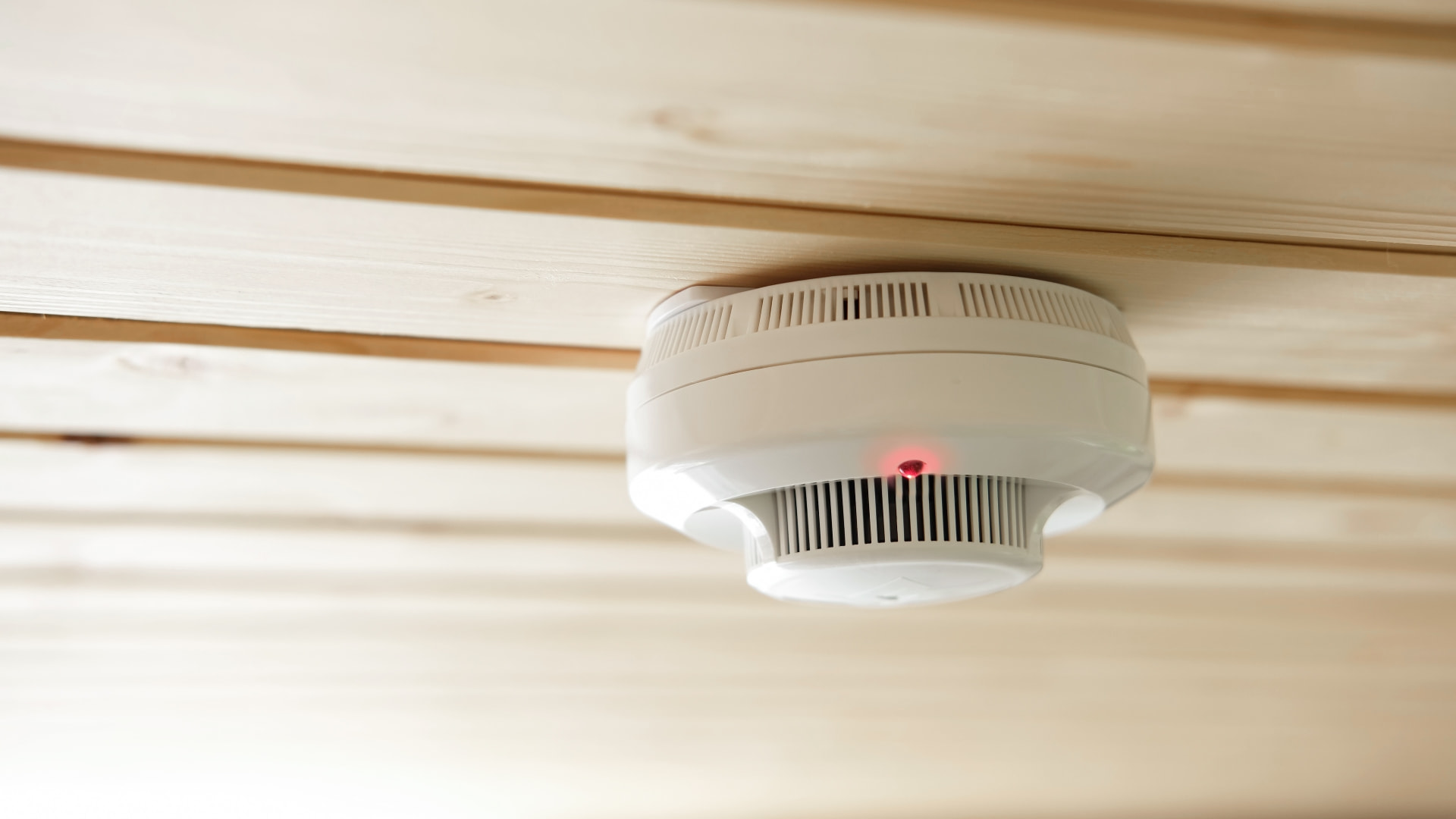
NICEIC Approved Contractor · Reg 041430
Interlinked alarms mean one detector sounds them all, so the smoke in the kitchen wakes the bedrooms upstairs. Mains-wired with battery backup, fitted to current regulations, tested and certificated. Free quote, fixed price in advance, no deposit.
4.8 from 58 Google reviews · NICEIC Approved Contractor 041430 · 18th Edition
NICEIC Approved
Contractor registration 041430
38 years in the trade
Qualified electrician since 1988
Fixed price, no deposit
Quoted free before work starts
£5m public liability
Fully insured on every visit
The service
A mains-wired alarm system is a permanent part of the installation rather than a battery unit on a ceiling. Detectors are supplied from the fixed wiring with battery backup, positioned according to the layout of the property, and interlinked so that any one of them triggers all of them.
The work covers optical smoke detectors on escape routes, heat detectors in kitchens and garages where cooking fumes would cause constant false alarms, and carbon monoxide detectors where there are fuel-burning appliances. Interlinking can be hard-wired or radio-linked depending on how accessible the ceiling voids are.
Detector positioning is the part that decides whether the system works. Distance from walls, from light fittings and from cooking and steam sources all matter, as does having a detector on every storey and on the escape route from each bedroom.
Everything is fitted to current regulations, tested on completion and certificated by a NICEIC Approved Contractor, with the system demonstrated to you before we leave.
Homes with battery-only alarms
Standalone battery units sound only in the room they are in, no use at all when the fire starts downstairs and you are asleep upstairs.
Landlords and rented property
Rented homes have specific alarm requirements, and a mains-wired interlinked system is the straightforward way to satisfy them.
Rewires and renovations
Alarm wiring costs almost nothing while a property is open and is a substantial job to retrofit afterwards.
Homes with fuel-burning appliances
Gas boilers, solid fuel stoves, open fires and attached garages all warrant carbon monoxide detection alongside smoke and heat.
What it costs to leave it
Almost every domestic alarm failure comes down to the same three things: the alarm was not powered, was not in the right place, or was not linked to the rest of the house.
The most common failure of all. One false alarm from a grill leads to the battery coming out and never going back in.
A single alarm sounding downstairs may not wake anyone upstairs behind a closed door, which is exactly the scenario the system exists for.
The wrong detector type in a cooking area generates constant false alarms, and constant false alarms get the system disabled.
One alarm in a hallway does not cover a three-storey house, a converted loft, or a bedroom at the far end of a landing.
Carbon monoxide has no smell and no colour, and a smoke alarm will not detect it. Fuel-burning appliances need their own detector.
Detector sensors degrade over time and units have a stated end-of-life. An alarm past that date may not respond as designed.
Our process
Number of storeys, layout, escape routes, bedroom positions and where the fuel-burning appliances are: that determines the detector schedule.
Detector types and positions set out to current regulations: optical on escape routes, heat in kitchens and garages, CO where appliances require it.
Units, wiring, interlinking method and making good, quoted as a fixed price in advance. No deposit required.
Detectors supplied from the fixed wiring with battery backup, hard-wired or radio interlinked, cables run and ceilings made good.
Each detector tested individually and the interlink confirmed by triggering one and verifying every other unit responds.
The system demonstrated, testing and hush functions explained, certification issued for the work.
What you get
Interlinking is the single biggest improvement over standalone units: the warning reaches sleeping occupants wherever the fire starts.
Mains-supplied with battery backup, so the system stays live without anyone remembering to maintain it.
Heat detectors in cooking areas and correct positioning elsewhere stop the nuisance triggers that get systems disabled.
CO detection where there are fuel-burning appliances, for the hazard a smoke alarm cannot see.
A mains-wired interlinked system is the straightforward way to meet the alarm requirements for rented property.
Fitted to current regulations by a NICEIC Approved Contractor with £5,000,000 public liability insurance.
In detail
Getting alarms right is a design job. The type of detector, where it goes and how the units talk to each other all follow from the layout of the property.
Optical smoke detectors respond well to the slow, smouldering fires typical of furnishings and electrical faults, which is why they suit hallways, landings and living rooms. Heat detectors respond to a rapid rise in temperature instead, making them the correct choice for kitchens and garages where steam and cooking fumes would trigger a smoke detector daily.
Carbon monoxide detectors are an entirely separate function. CO is odourless and colourless, no smoke detector will register it, and it is produced by any incompletely burning fuel appliance: boilers, stoves, open fires and, in some layouts, an attached garage.
The general principle is a detector on every storey, on the escape route, and in the principal habitable room. Bedrooms behind long landings, converted lofts and split-level layouts all need consideration beyond that minimum.
Position within the room matters too: detectors are kept clear of walls, corners, light fittings and ventilation, and away from bathroom doorways where steam causes false alarms. Sloped ceilings and stairwells have their own positioning rules.
Hard-wired interlinking runs an interconnect conductor between detectors. It is the most robust arrangement and the obvious choice during a rewire or where lofts and voids give easy access.
Radio interlink pairs mains-supplied detectors wirelessly instead, which avoids chasing walls and lifting floors in a finished property. Both give the same outcome: one detector triggers all, and the choice is usually driven by access and disruption rather than performance.
Rented homes carry alarm obligations, and a mains-wired interlinked system is the clean way to satisfy them across a whole property rather than managing batteries between tenancies. Landlords commonly have this done alongside an EICR so the installation and the alarms are dealt with in one visit.
Alarm wiring is close to free while a property is open and floors are up. Retrofitting the same hard-wired system into a finished house means chases, lifted boards and making good. If a rewire is on the cards, the alarm system belongs in that scope.
Full rewires carry a 10-year electrical installation certificate, and as a NICEIC Approved Contractor the work is covered by NICEIC's 6-year insurance-backed guarantee should Amara ever cease trading.
Detectors should be tested regularly using the test button, a weekly habit is the standard advice, and kept free of dust. Every unit carries a manufacturer end-of-life date, after which its sensor can no longer be relied on and the unit is replaced rather than cleaned.
If an alarm sounds repeatedly with no cause, that is worth investigating rather than silencing: it is usually dust, an ageing sensor, or a detector positioned somewhere it should not be.
The business is mainly domestic. Light commercial alarm work is undertaken on request; give Mike a call to discuss what the premises needs.
Smoke, heat and carbon monoxide alarm installation is carried out across Congleton and the wider Cheshire area, plus Manchester, Stoke-on-Trent, Stockport, Cheadle, Wilmslow, Altrincham and Crewe.
Where we work
Based in Congleton and covering the surrounding towns. See the full list of areas we cover or get in touch.
Related services
Common questions
Anything not covered here, call Mike on 07946 541693.
It depends on the number of detectors, the property layout and whether hard-wired or radio interlinking suits the building. Quotes are free, fixed in price in advance, and no deposit is required.
A radio-interlinked system in an average house is often a day. Hard-wired interlinking in a finished property takes longer because of the cable routes and making good. You are told the expected duration when it is quoted.
As a general principle, one on every storey, on the escape route, and in the principal habitable room, with a heat detector in the kitchen. The exact schedule follows the layout and is set out before the quote.
Optical smoke detectors respond to smoke particles and suit hallways, landings and living rooms. Heat detectors respond to a rapid temperature rise and are used in kitchens and garages, where cooking fumes and steam would set off a smoke detector constantly.
Interlinking is the single biggest safety improvement over standalone units. One detector triggering sounds them all, so a fire downstairs wakes people asleep upstairs behind a closed door.
Not necessarily. Radio interlinking between mains-supplied detectors avoids most of that in a finished property. Hard-wired interlinking is the better option during a rewire or where loft access allows.
Every detector has a manufacturer end-of-life date, typically around ten years, after which the sensor can no longer be relied upon and the unit is replaced. Detectors should be tested regularly with the test button in the meantime.
If you have any fuel-burning appliance, a gas boiler, stove, open fire, then yes. Carbon monoxide is odourless and no smoke alarm will detect it.
Yes. The installation is tested on completion and certification issued for the work. Certain products and components carry a 12-month manufacturer warranty.
Yes. Persistent false alarms are usually dust, an ageing sensor past its end-of-life date, or a detector positioned too near a kitchen or bathroom. Fault-finding call-outs are charged at an hourly rate, made clear before we attend.
Next step
Tell Mike how many storeys the property has and where the bedrooms and appliances are, and he will set out what is needed. Quotes are free, fixed in advance, and no deposit is required.
07946 541693Mon–Fri 8am–7pm · Sat 9am–3pm
Accredited, approved and independently reviewed