Insulation breakdown and fire risk
Rubber-sheathed cable from the 1950s and 60s goes brittle and cracks at the terminations, exposing live conductors inside ceiling roses, switch boxes and behind sockets.

NICEIC Approved Contractor · Reg 041430
A whole-property rewire that removes the guesswork: a free site visit, a fixed price agreed in writing before we start, no deposit to pay, and a 10-year electrical installation certificate in your hand at the end. You know the cost, the circuits and the timescale up front.
4.8 from 58 Google reviews · Rewire specialist since 2007 · 38 years in the trade
38 years in the trade
Mike has been an electrician since 1988
10-year certificate
Electrical installation certificate on every rewire
NICEIC Approved
Contractor registration 041430
No deposit required
Nothing to pay up front, even on a full rewire
The service
A full house rewire replaces the entire fixed wiring of a property: every lighting and power circuit, the consumer unit, the earthing and bonding, and the sockets, switches and light fittings that connect to them. Old cable is pulled out rather than left buried in the walls, new circuits are run to a layout agreed with you, and the whole installation is tested and certificated before it is signed off.
It is the largest piece of electrical work most homes ever need, and it is only disruptive when it is planned badly. Mike surveys the property first, walks each room with you, and agrees where the sockets, switches, lights and outside points are going. That plan becomes a fixed price quote in writing, so the figure you accept is the figure you pay unless you ask for more work once we are in.
Amara is a two-person firm, so the electrician who quotes your rewire is the electrician who carries it out. There is no site manager to chase and no subcontractor turning up on day one who has never seen the property. Rewires are the core specialism of the business and have been since it was founded in 2007.
Every rewire ends the same way: circuits tested, results recorded, and a 10-year electrical installation certificate issued. As a NICEIC Approved Contractor, the work also sits behind NICEIC's 6-year insurance-backed guarantee should Amara ever cease trading, and certain products and components carry a 12-month manufacturer warranty.
Owners of pre-1980s houses
Properties still running rubber or fabric-sheathed cable, rewireable fuse boards and two-socket rooms. Common across Congleton, Crewe and the older Cheshire housing stock.
Renovation and extension projects
If floors are up and plaster is coming off anyway, a rewire costs far less disruption done now than retrofitted in two years' time.
Buyers acting on a survey
A home buyer electrical report or an EICR flagging widespread C2 items usually points to a rewire rather than a list of patch repairs.
Landlords bringing a property up to standard
Where an EICR has returned unsatisfactory across multiple circuits, a rewire resets the installation and the five-year inspection clock with it.
What it costs to leave it
Old wiring rarely fails politely. It degrades quietly for years, then shows itself as a tripping board, a warm socket, or a scorch mark behind a faceplate. The cost of waiting is almost always higher than the cost of planning the work properly.
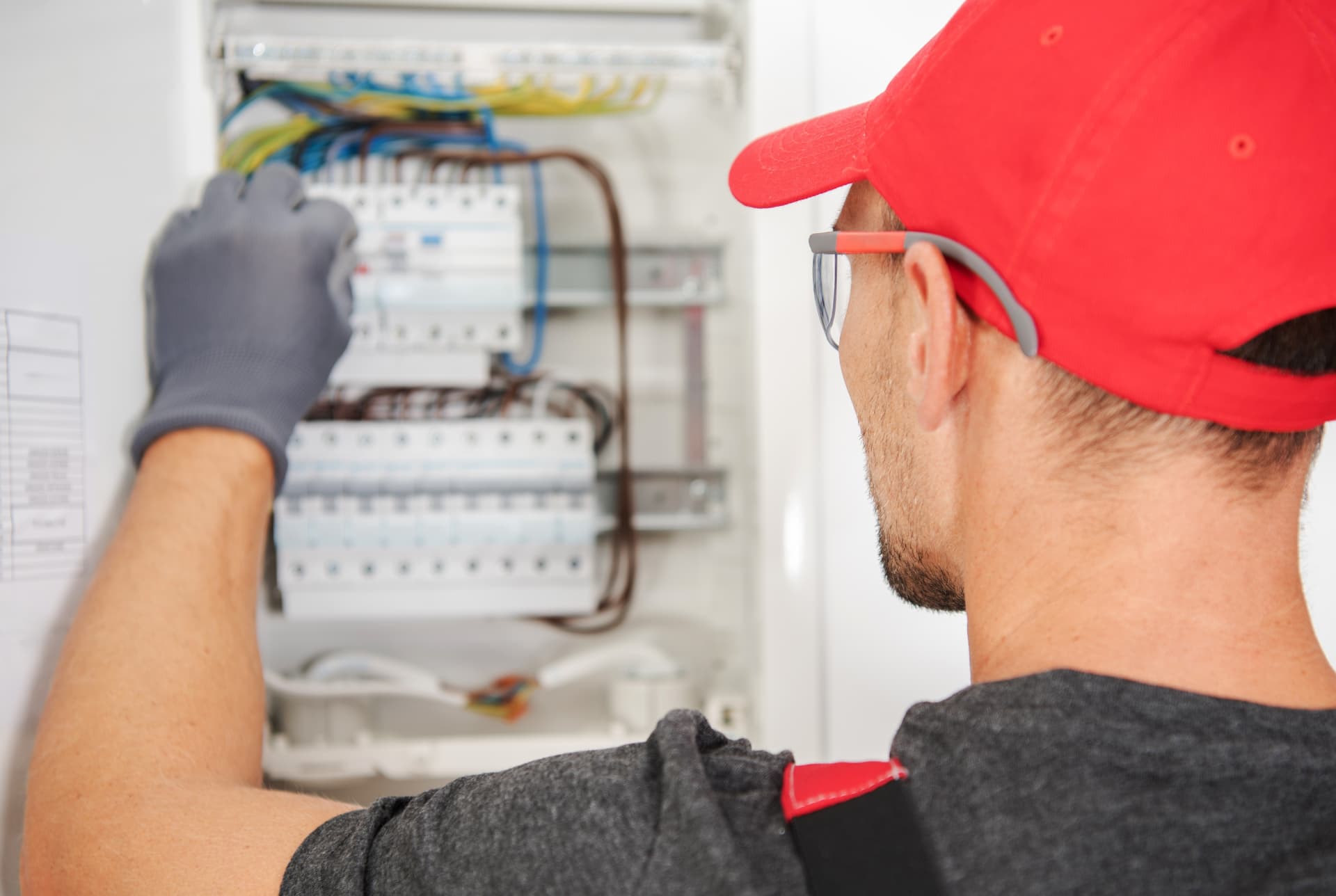
Rubber-sheathed cable from the 1950s and 60s goes brittle and cracks at the terminations, exposing live conductors inside ceiling roses, switch boxes and behind sockets.
Old rewireable fuse boards offer no RCD protection. A cable driven through by a picture nail, or a faulty appliance, has nothing fast enough to disconnect the supply before it becomes dangerous.
Paying for repeated fault-finding call-outs, a board swap here and a circuit repair there, spends the price of the job in instalments without ever giving you a certificated installation.
A buyer's survey that recommends a rewire becomes a price negotiation, a retention, or a lost sale. Doing the work with a certificate on file removes the argument.
Extension leads daisy-chained across rooms, no outside socket, a fuse that trips when the kettle and microwave run together. That is the installation telling you it was designed for a 1962 household.
Rewiring after a house has been replastered and decorated means chasing walls and lifting new floors. Sequenced properly, a rewire happens before the finishes, not through them.
Our process
Mike looks at the existing installation, the consumer unit, the earthing arrangement, the construction of the floors and walls, and the access. Nothing is quoted from a photograph.
Room by room, we agree how many sockets you want and where, the lighting layout, switch positions, outside points, and anything to allow for such as a future EV charger.
You get a free fixed-price quote the same day or promptly after the visit, covering labour, materials, circuits and accessories. No deposit is required to book the work in.
Old cable is removed, new circuits are run, back boxes are set, and the property is prepared for plastering. Dust sheets go down and the house is cleared up at the end of each day.
Sockets, switches, lights and the new consumer unit with RCBO protection are fitted, and the installation is energised circuit by circuit.
Full inspection and testing to 18th Edition standards, results recorded, a 10-year electrical installation certificate issued, and the board clearly labelled so you know what each circuit does.
What you get
Rewires are quoted fixed after a site visit. The figure in your quote is the figure at the end, unless you add work.
No deposit is required on any rewire. You are not funding someone else's materials before your job starts.
A modern consumer unit with individual RCBO protection means one faulty appliance takes out one circuit, not the whole house.
Designed around how the rooms are used now: kitchen worktops, home offices, TV walls, bedside tables and outside points.
A 10-year electrical installation certificate, NICEIC's 6-year insurance-backed guarantee behind the work, and a clean bill of health for the next buyer's survey.
The point reviewers make most often. Dust sheets down, mess cleared daily, and the property left spotless when the job is finished.
In detail
No two rewires are identical. A 1930s semi with suspended timber floors is a different job to a 1970s bungalow on a concrete slab or a ground-floor flat with a neighbour above. Here is how the work actually differs, and what goes into it.
Modern rewires use twin-and-earth PVC cable sized to the circuit: 2.5mm² for ring final circuits feeding sockets, 1.5mm² for lighting, 6mm² or larger for cooker and shower circuits, and 6mm² or 10mm² where an EV charger is being allowed for. Cables run in walls are either protected by earthed metal capping and depth, or routed within the safe zones set out in the wiring regulations.
The consumer unit is a metal-clad board with individual RCBO protection per circuit and surge protection where appropriate, sited so it stays accessible. Earthing and main protective bonding to gas and water services are upgraded as part of the work, because a new board on old bonding is not a compliant installation.
Older Cheshire housing tends to have lath and plaster ceilings, solid brick walls and suspended timber floors. That combination dictates the route: cables drop from above where boards can be lifted, and chases are cut only where there is no better path. Notching and drilling of joists is kept within the permitted zones so the structure is not weakened.
Where a property is listed or has original features, cable runs are planned to avoid cornicing, panelling and original floorboards wherever possible. It takes longer to route around them than through them, which is why the survey matters before a price is given.
An empty property is the quickest and least disruptive rewire: full access, no furniture to work around, and no need to keep circuits live overnight. If you are buying and have the keys before you move in, that window is worth using.
Occupied rewires are done in stages so the house stays liveable: rooms are worked through in sequence, and power and lighting are restored to the areas you are using at the end of each day. It takes a little longer, and the plan for it is agreed before the job starts, not improvised on day three.
Not every property needs everything replaced. Where an EICR shows the majority of circuits are sound and only specific ones are at end of life, a partial rewire targets those circuits and the board. That is a judgement made from test results, not from the age of the house alone.
If you are unsure which side of that line your property falls, an EICR report is the sensible first step. It costs a fraction of a rewire and gives a documented condition assessment to decide from.
A rewire is the cheapest time to add anything that needs a cable. Outside sockets and garden lighting, a supply to a garage or workshop, a dedicated circuit ready for an EV charger, mains-wired interlinked smoke and heat alarms, extra kitchen sockets, USB outlets and network cabling all cost far less now than as a separate visit later.
The business is mainly domestic, and rewires of houses, flats and bungalows are the bulk of the work. Light commercial rewiring, small shops, offices and units, is undertaken on request, where the installation is comparable in scale and the work can be programmed around trading hours.
Larger commercial contracts with multiple distribution boards and three-phase distribution sit outside what a two-person firm should be taking on, and we will say so rather than stretch to it.
Every circuit is tested to 18th Edition standards: continuity, insulation resistance, polarity, earth fault loop impedance and RCD operation. The results are recorded on the electrical installation certificate along with the schedule of circuits, so any electrician working on the house in future has a documented baseline.
Mike holds City & Guilds 2391 for inspection and testing, which is the qualification the certification actually rests on. Keep the certificate with your property paperwork; it is the document a buyer's solicitor and surveyor will ask for.
Rewires are carried out across Congleton and the wider Cheshire area, along with Manchester, Stoke-on-Trent, Stockport, Cheadle, Wilmslow, Altrincham and Crewe. Congleton and the immediate surrounding villages are the home patch, so site visits there are usually arranged quickly.
Where we work
Based in Congleton and covering the surrounding towns. See the full list of areas we cover or get in touch.
Related services
Common questions
Anything not covered here, call Mike on 07946 541693.
Rewires are quoted as a fixed price after a free site visit rather than from a price list, because the cost depends on the size of the property, the construction, the number of circuits and accessories, and whether the house is occupied. The quote is free, given the same day or promptly after the visit, and no deposit is required.
The timescale is agreed with you as part of the quote, based on the size of the property and whether it is empty or occupied. An empty house runs faster because there is full access and no need to restore power to rooms in use each evening. You are given the expected duration in writing before the work is booked in.
No. Occupied properties are worked through in stages so the house stays liveable, with power and lighting restored to the rooms you are using at the end of each day. Moving out or timing the work before you move in is faster if that is an option for you.
No deposit is required, even on a full rewire. That is deliberate: you are not paying anything before work begins.
Full rewires are covered by a 10-year electrical installation certificate. Certain products and components carry a 12-month manufacturer warranty. As a NICEIC Approved Contractor, the work also sits behind NICEIC's 6-year insurance-backed guarantee should Amara ever cease trading.
A properly installed modern rewire is a long-term installation, and the certificate issued on completion runs for 10 years. Periodic inspection keeps it documented after that: an EICR every ten years for an owner-occupied home, or every five years for a rented property.
Chasing and lifting boards is unavoidable in places, but where and how much is discussed before work starts and kept to the minimum the routes allow. Dust sheets go down, the property is cleared up each day and left clean at the end; it is the thing reviewers mention most.
Yes. Amara Electrical Contractors Ltd is a NICEIC Approved Contractor, registration number 041430. Mike holds City & Guilds 2391 inspection and testing and works to the 18th Edition wiring regulations, with £5,000,000 public liability insurance.
A rewire is planned work, not an emergency job. If you have a live fault, a burning smell or a board that will not stay on, call Mike straight away; fault-finding call-outs are charged at an hourly rate, quoted before any repair work starts, and the rewire conversation can follow once the property is safe.
It is the sensible first step if you are not sure. An EICR gives a documented assessment of the existing circuits so you can decide between a full rewire, a partial rewire or targeted repairs on evidence rather than on the age of the house.
Next step
Call Mike directly for the quickest answer, or send the form with the property address and roughly how many rooms. Site visits are free and quotes are given the same day or promptly after the visit.
07946 541693Mon–Fri 8am–7pm · Sat 9am–3pm
Accredited, approved and independently reviewed